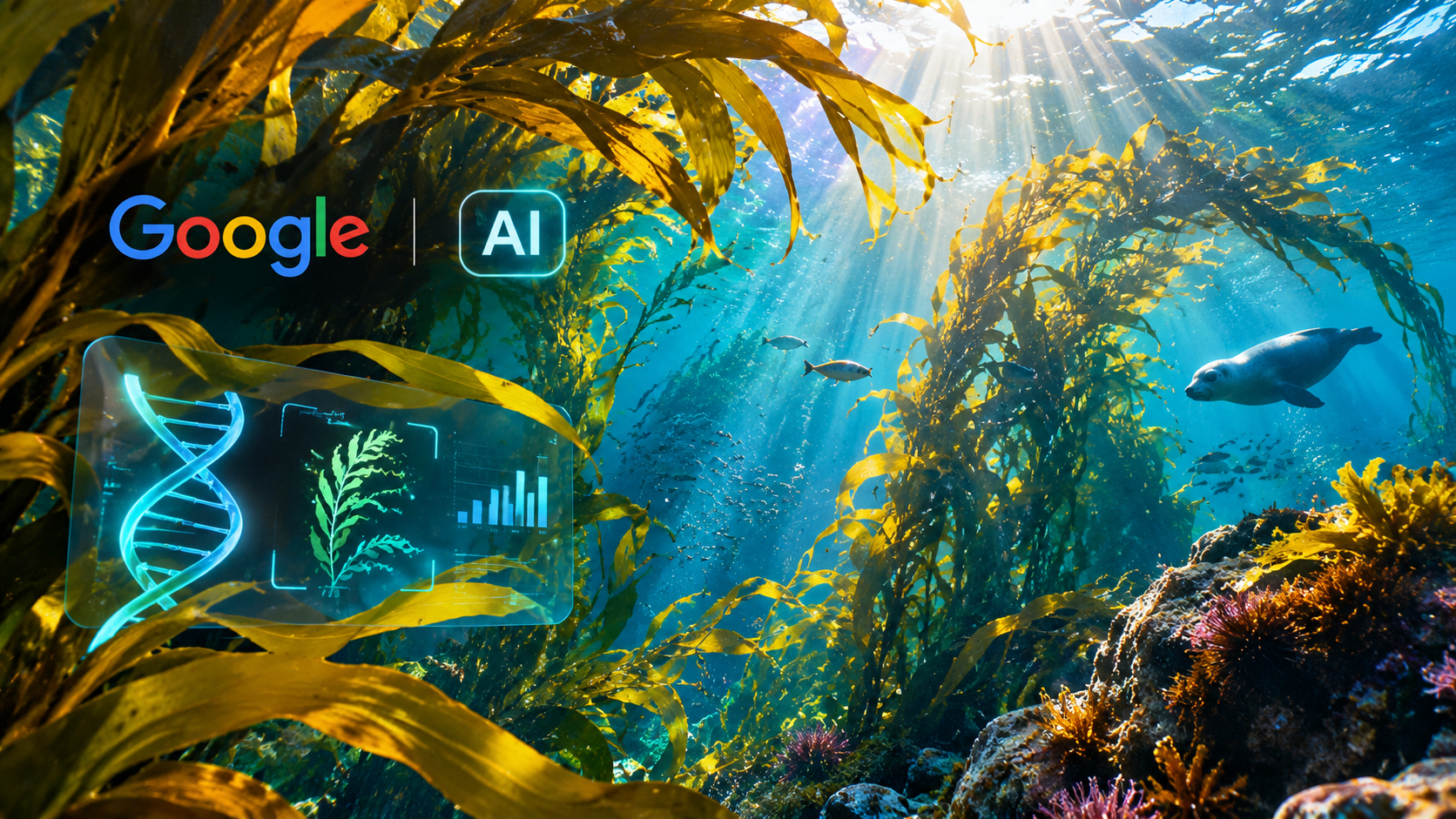
Giant kelp forests are vital to marine ecosystems. They provide habitats for numerous species and help protect coastlines, but rising ocean temperatures are contributing to their decline.
In Australia, Google is working with CSIRO, the national science agency, to better understand giant kelp genetics and support conservation efforts.
Researchers adapted DeepVariant, Google’s open-source artificial intelligence tool, to analyze DNA from 600 wild specimens collected across 40 sites along Tasmania’s coastline.
In this region, giant kelp populations have declined to approximately 5% of their historical levels.
The genetic analysis, combined with laboratory cross-breeding studies, aims to help researchers identify genetically diverse kelp that may be better able to tolerate warmer waters and support future restoration efforts.
The project demonstrates how artificial intelligence can contribute to biodiversity conservation. However, restoring underwater forests remains a future goal rather than an outcome already achieved.